
Overview
The best of the Khumbu, beyond Base Camp
The Everest High Passes trek is, without question, one of the finest ways to experience the Khumbu far richer and more demanding journey than the standard Everest Base Camp route. Rather than walking in on a single trail and back out the same way, this expedition threads a complete circuit through the heart of the region, crossing three of its highest and most spectacular passes and finishing with a genuine mountaineering objective: the summit of Lobuche Peak.
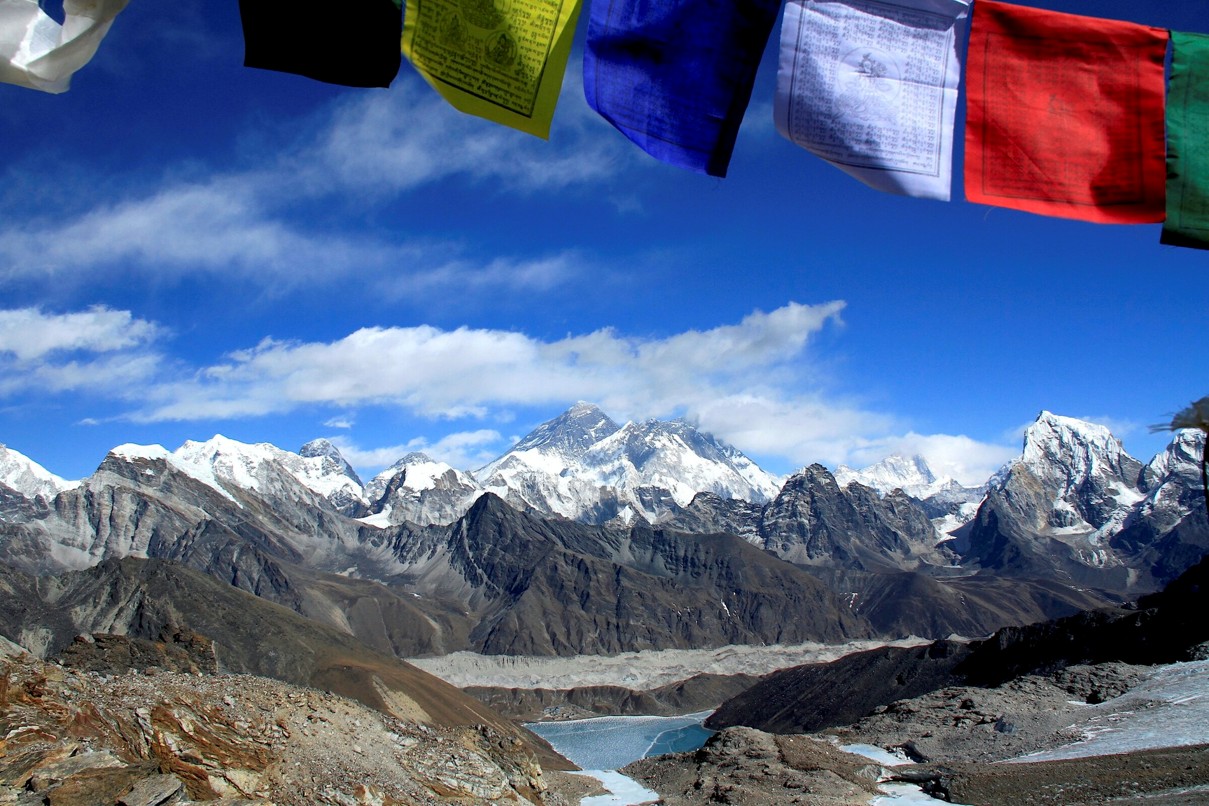
Each pass reveals a different face of the Himalaya. Kongma La, the highest of the three at 5,535 meters, is crossed on open glacier terrain beneath the shadow of Nuptse. Cho La is the most technical of the three, a steep and rocky crossing rewarded with sweeping views over the Gokyo Valley. Renjo La, the gentlest and arguably the most scenic, opens onto a vast panorama of turquoise lakes and the full sweep of the Khumbu’s 8,000-meter giants Everest, Lhotse, Makalu, and Cho Oyu all visible in a single sweep from the ridge above.
Between the passes, the trek crosses two of the world’s great glacial landscapes: the Khumbu Glacier, flowing directly from the foot of the infamous Khumbu Icefall, and the Ngozumpa Glacier, the largest in Nepal, which must be crossed on the way into the Gokyo Lakes. From Gokyo Ri and Kala Patthar, the trek’s two classic viewpoints, the bird’s-eye views over turquoise glacial lakes and the entire Everest massif are some of the most photographed vistas in the Himalaya, and for good reason.
The climbing objective at the center of the journey is Lobuche Peak (6,119 m), a serious but achievable summit that offers a genuine taste of high-altitude mountaineering fixed ropes, exposed ridgelines, and a true alpine start without venturing into expedition-grade technical terrain. Throughout the journey, the trail also moves through the cultural heart of the Khumbu: Namche Bazaar, Tengboche Monastery, and the quiet, less-visited village of Thame.


